This page is for bulletins and news of general interest of amateur radio.
If you have anything that you think should be listed here advise
Web Manager by
email or let Web Manager know where to get
it.
This Web Site helps Amateur Radio by providing
roll calls for Net Control people. Also all forms and information needed is
listed on this site to allow one to print forms needed or information on how
to do it. Roll Call Sheets don't have to be mailed out to them. It has
really helped this net for many years.
++++++++++++++++++++++++++++++++++++++++++++++++++++++++++
W7XY Donnie
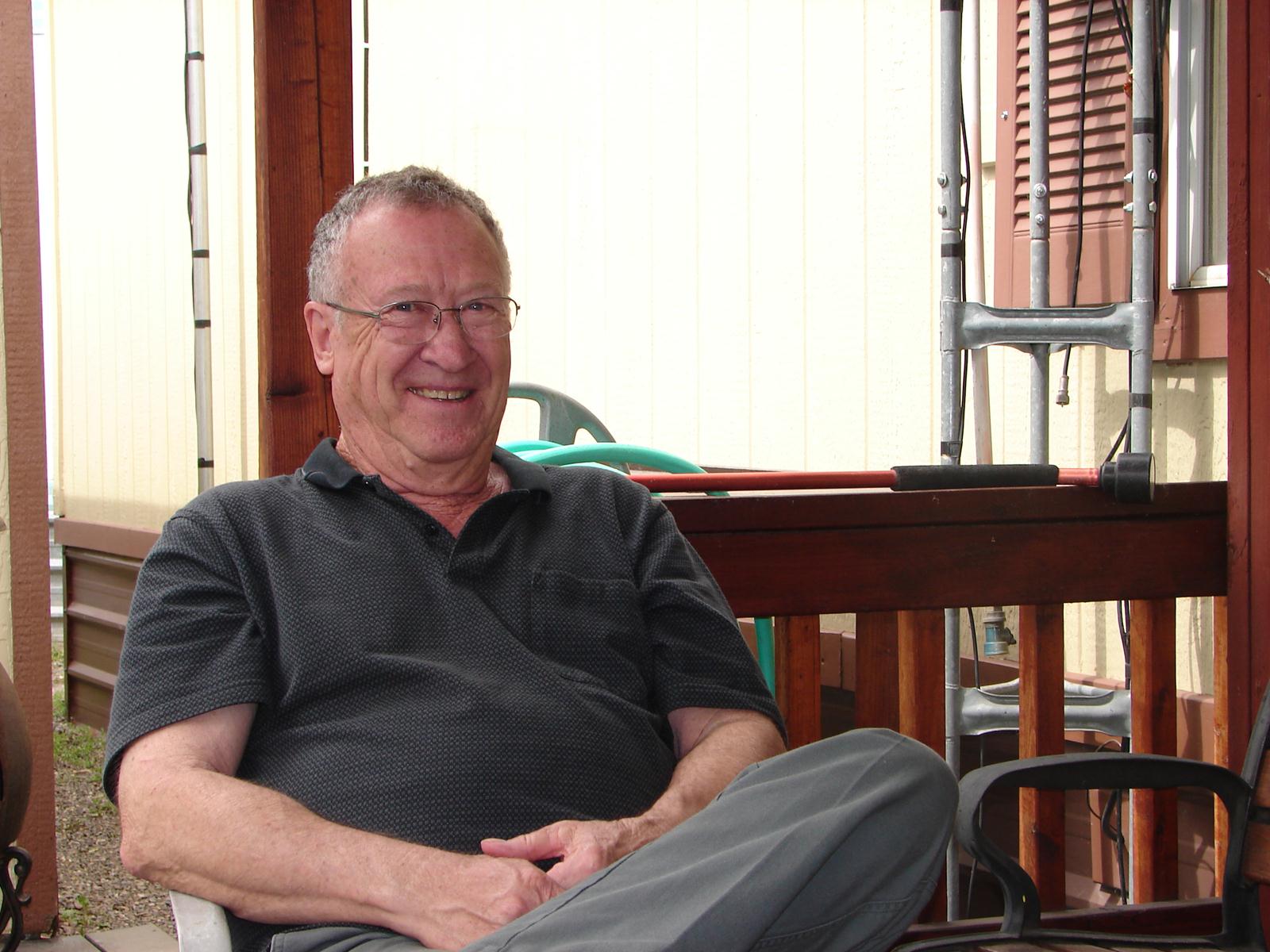
Years ago someone tried to write a web site for Montana Traffic Net.
Donnie W7XY saw this and realized the person didn't know how to write code
or
anything about doing it. There was a lot of commercials placed on it that
the writer
didn't know about. Donnie rewrote the code and found a site and a company to
donate the space. For years we could get some companies to donate space
no charge for the services we provided. Donnie wrote all the code from the
start
after the bad start. Years later nobody could be found to donate space so we
switched to commercial web site. We have had this for many years and now
Donnie has reached 80 years old and picked up a few medical issues. So now
Nick NC7BC has taken over writing the code. This way we can keep up with
what
goes on around us. Thank you Nick for serving as web master and also Thanks
to Donnie for many years of managing the net and calling many nets at night.
Donnie was a little worried if something happened to him it would be tough
for
someone to find their way in and get things going again. This to fill ever
one in
on what is happening. Written by old Web Master
11/11/2017
++++++++++++++++++++++++++++++++++++++++++++++++++++++++++
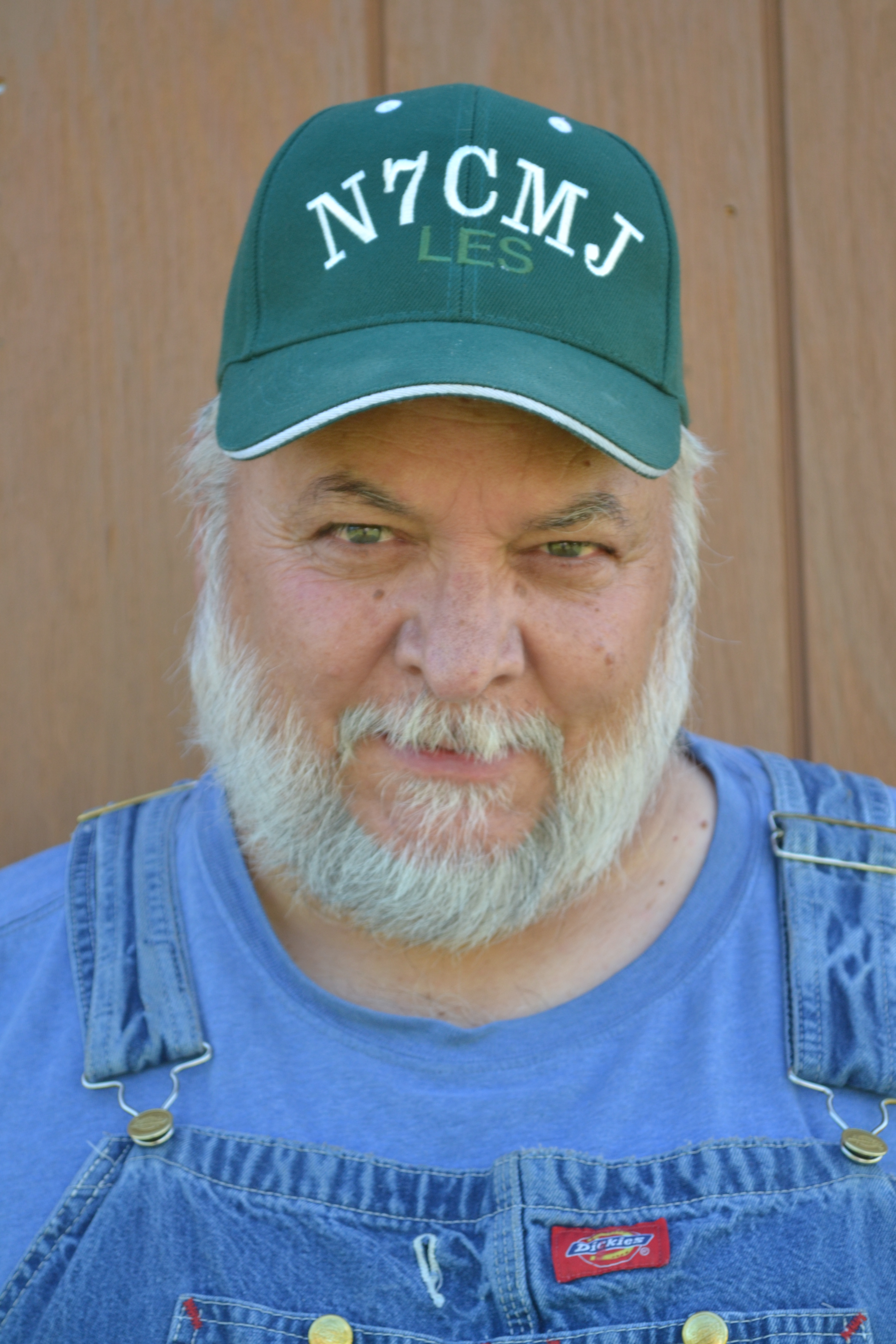
Thanks to Les N7CMJ our present Net Manager. He does a real good job.
An update as of 11/11/2017
After now working with Les for some time we all know
him as a very good manager.
He has been very easy to work with and that is what Ham radio is all about.
Help him when you can as he does a lot to keep us going.
++++++++++++++++++++++++++++++++++++++++++++++++++++++++++
We wish to Thank Darrell W7AMK for his time spent as Net Manager as he is
turning it over on the First of July 2015 to Les N7CMJ.
Thanks again Darrell
for the time you spent as
Net Manager. 73
++++++++++++++++++++++++++++++++++++++++++++++++++++++++++
Silent Key
Frank Irish KA7LEB
Missoula, MT February 24, 2014
++++++++++++++++++++++++++++++++++++++++++++++++++++++++++
Silent Key
Bob Phillips W7LMA
Moyie Springs, ID
February 17, 2014
++++++++++++++++++++++++++++++++++++++++++++++++++++++++++
Silent Key
KJ7Z
Phillip C. Barnett threw his
final pitch on this earth Sunday March
25th 2012 at the age of 62. Phil was born February 1st 1950 the third
of three sons of Melvin Barnett and
Willie Estelle Malaney in Fort Worth, Texas. He moved to sunny beaches of
southern California at the age of 2 where he learned to surf the waves and
began his deep passion for the game of baseball. When Phil was playing little
league baseball, he made the all star team 5 straight years, in the district
tournament he pitched a no hitter , when he played baseball for Lakewood High
School also pitched 2 no hitters and had many double strike out games and a 17
strike game, he was also hitting over 400. Pro scouts talking to him and
visiting with his parents but he joined the army instead. There are a lot of
people who can play of the few. He entered the army in June 1958 and while
stationed in Fort Lewis Washington as a Hercules Missile Specialist met his
first wife Chelly Bates the mother of his two children Natalie and Wade. After
the death of his father in 1970, she brought Phil to theand Chelly divorced in
1994 and he found love again and married Wilma Kampka in May 2001. Phil retired
from the US Forest and where he worked as a Sales Administrator, Law
Enforcement Officer and was certified as an Advanced Log Scaler. He was an extra
class ham operator and proudly carried the call sign KJ7Z, the �Big Nasty� He
taught many classes on the art of Morris Code and spent many a weekend climbing
his tower, administering a test, and helping fellow ham operators set up their
ham station. His passion ran so deep he helped his daughter receive her
license at the age of 8 and recently many a weekend Phil was the voice of the
local swap meet. He loved to gab with anyone and had many a joke to share and
tale to tell. �Bean the first three in head� was a favorite that Phil told new
many different a capacities with the Bitterroot Bucs , The Red Sox, local
T-ball league thru American Legion and softball teams as well played on
several softball teams including one with his colleagues of the Bitterroot
National Forest. He umpired for several years as well. He never missed a World
Series and if there was a game he was watching. His passion for coaching
continues thru both of his children�s interest in coaching local youth. Phil
is survived by his wife Wilma, daughter Natalie Hinther and her husband Brian
and their three sons Stone, Garrison and Marshall, his son Wade and his fianc�
Vanessa, her children Logan and Jyllian and Wade�s children Autumn and Drake,
his brother Lewis Barnett of Stevensville and Clayton Barnett of Huntington
Beach, California and many nieces and nephews. Phil asked for no formal
services.
++++++++++++++++++++++++++++++++++++++++++++++++++++++++++
Silent Key
Everyone waited for George to talk and would
talk to him even if they didn't want to talk that day. . All of us looked
forward to talking to him when we heard his voice on the air. He will be
missed and thought of often. Donnie W7XY
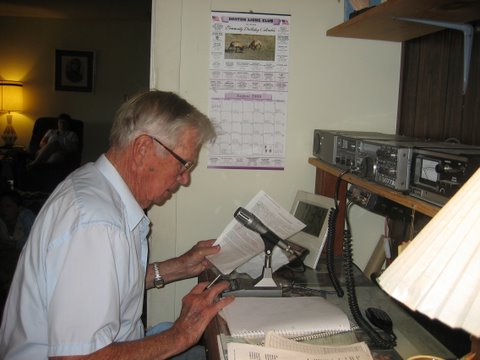
George at his Station
KA7VQV, George
Peterson, passed away Tuesday morning March 15, 2011 at about 1:00 AM in the Central
Montana Medical Center Nursing Home in Lewistown, Montana. George very
much enjoyed his many years of service to the MTN as Wednesday Night Net
Control and often talked about his many valued Ham Radio friendships.
Most of those friendships developed around his nightly check-ins to the
MTN.
He
suffered a minor stroke a couple of years ago which made it difficult for
him to continue as net control. However, he still very much enjoyed the
net and tried to check in as often as possible. He suffered another
severe stroke on February 22. As before, he fought it hard but his 92
years and the magnitude of the stroke took their toll quickly. He passed
quietly with his daughter Dorenda and several loving Nursing home staff
members around him.
I know that if he could
have one more QSO with you all, he would end it with "May The Good
Lord Bless and Keep You -- 73" That is my wish for you all as well.
Thank you all for being such an important part of my Dad's life.
Lawrence Peterson WA7R.
~~~~~~~~~~~~
Carla wrote this last night after the QST about George...thought you
might like it. Feel free to share if you like. Kinda hit close to
home with me as I took over from George on Wed nights. Never met the
man, but I sure did look forward to hearing from him...Carla started
sending him Xmas cards a couple years ago, and he never failed to send
one back. She sent him a family picture of us so he could associate
the call signs with us. He liked it. We're sure going to miss him.
73Darrell, KB7PJH
Carla, KE7SFX
In Memory of KA7VQV
-George Peterson
When we hear the call sign one last time
We�ll remember the man who was very fine
A role model, a mentor, a friend
Someone to look up to, until the end.
Now the radio is silent and covered with dust
We�ve lost a good man, someone who had our trust.
The contacts, the nets, the friends he made
No-one who knew him would ever trade
The world will now be a dimmer place
Without George�s bright smiling face.
One day we�ll meet, my friend
When our time on earth is at an end
You were a wonderful man who many aspire to be
And now my friend, you are a Silent Key.
You may be gone, but never forgotten
A brighter star, heaven has never gotten
So until we meet again
�73 my friend.
--Carla Stafford, KE7SFX
++++++++++++++++++++++++++++++++++++++++++++++++++++++++++
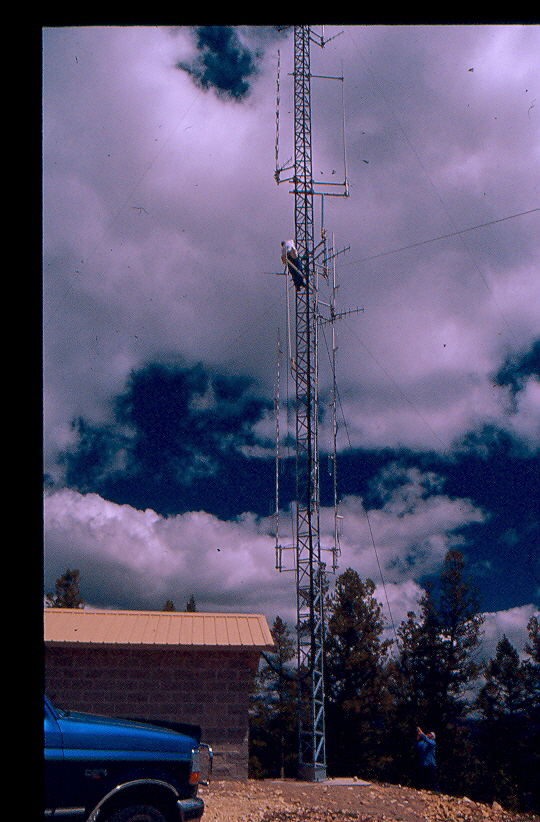
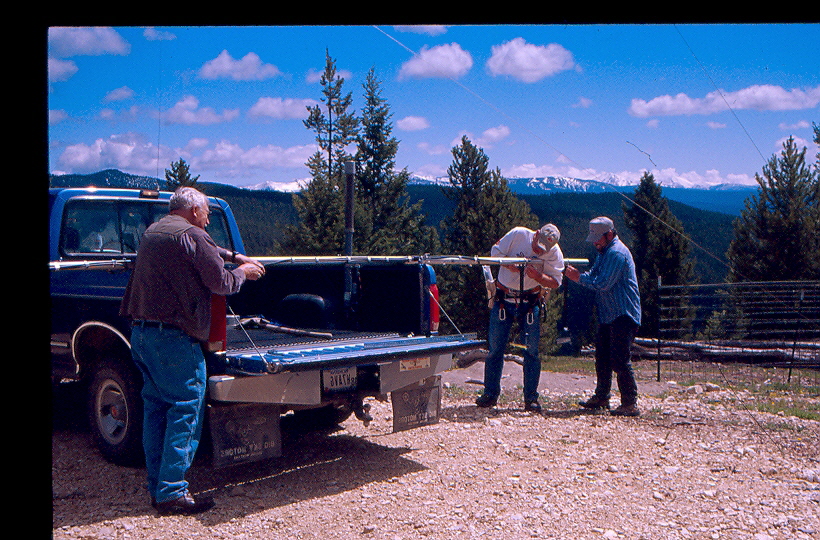
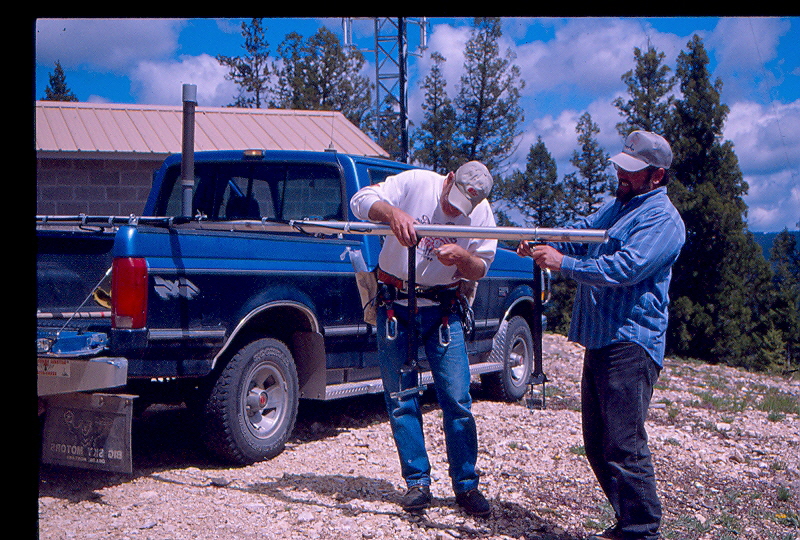
These pictures were taken in 2005 at the Butler
Repeater site. Bill, K7MT is the one on the tower. The other two are Larry,
N7YET and Steve, NO7V. They where sent to me by W7PUG Bob and W7AVG Bill
sent them to him.
++++++++++++++++++++++++++++++++++++++++++++++++++++++++++
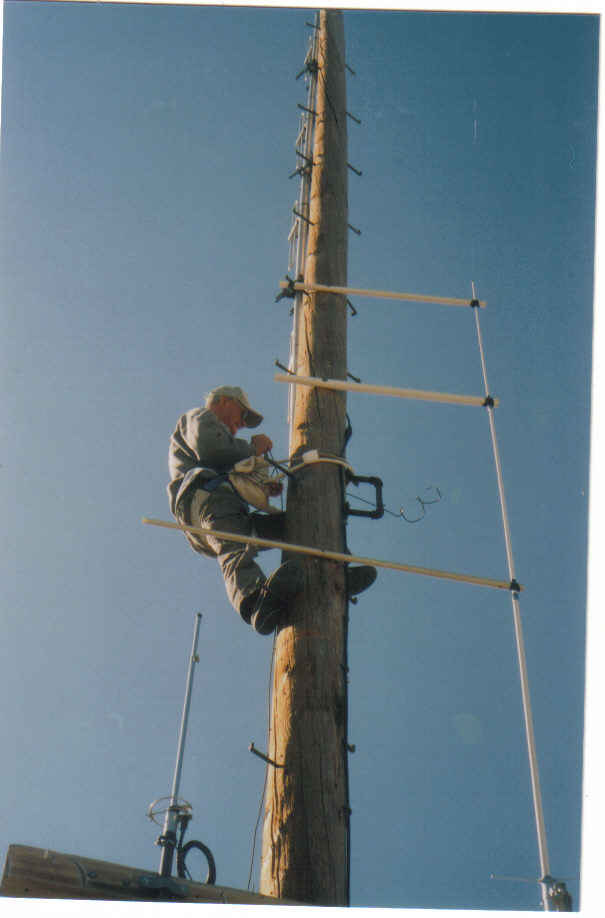
W7AVG (Bill Koler) at the Dillon repeater site atop 9200 ft. Maurer
Mountain
20 miles SE of Dillon. Bill is seen in the picture repairing the
146.7600 MHz repeater
antenna ground and tightening the lead in cable. Bill works closely with
Todd (AE7V)
and the DES here in Beaverhead County. Keeps all the amature radio
operators here
in Dillon up to date on emergency services. He is also a mentor to new
hams,
such as myself.
73 Bob (KB7FPZ)
++++++++++++++++++++++++++++++++++++++++++++++++++++++++++
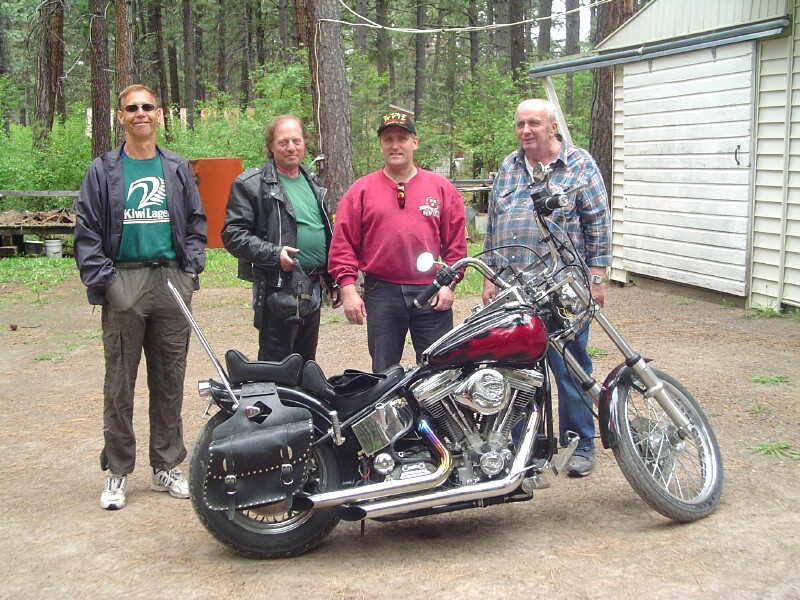
Here is a picture of crew
helping repair antenna's for K7PTO John
Nice motorcycle
belongs to �Yogi Bear�, K7YB.
Left to right: WB7OTC, Bruce---K7YB,
Bob---WV7Z, Mike---K7PTO, John. Not pictured: urs trooly.
Jerry, KB7QQ
Thanks Jerry
++++++++++++++++++++++++++++++++++++++++++++++++++++++++++
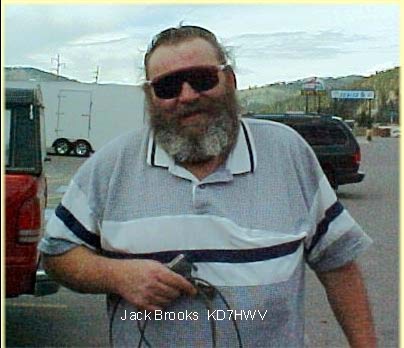
We want to say Thank You to KD7HWV Jack for all the years
of service running the Montana Traffic Net.
It is not an easy task keeping things running smoothly and
taking the Flak and everybody wanting it perfect.
We will miss you. Now you can sit
back and let somebody else count.
++++++++++++++++++++++++++++++++++++++++++++++++++++++++++
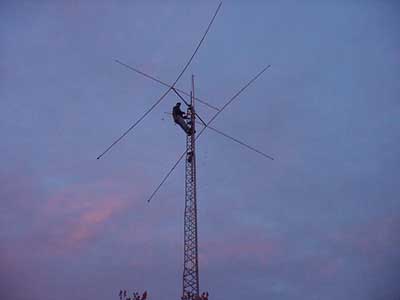
Todd on tower. AE7V
++++++++++++++++++++++++++++++++++++++++++++++++++++++++++
Below the article
listed below is an article related to the story by N7VLC
Thanks Ron.
~~~~~~~~~~~~~~~~~~~~~~~~~~~~~~`
Greetings from Great Falls MT.
Just happened across your story about
Darrel Moore - K7CPJ and his clandestine Ham station at the
University of Montana, on the MTN website (Donnie Fort)
I couldn't find an E-mail address for
Darrel, but if you do, feel free to forward this to him.
********************
I don't remember who it was who said back in the 1800's something to
the effect that in regards to technology, "everything has
already been invented... etc." (was that Edison?)
Well, guess you beat us to the punch by a
few decades.....
My friends and I were at the University
of Montana back in the EARLY 1970's. We ALSO strung a long wire
between the Craig - Elrod - Dunaway dorms (I lived in 341 CRAIG). I
don't remember the room numbers of the other guys that actually had
the wire out their windows, we were all on the top floors... (FATE?)
Several times we had a heavy,
heavy frost, and there... very obvious and highly visable.... was
this THICK "frostly line" up in the sky between the buildings where
NO wire should be ! Being the geeks we were, we decided to run a
current through that line to heat it up slightly and melt the ice,
so that it would not be as visible. We would ground one end and
apply voltage to the other. This worked rather well several times,
until one day, someone of us got a bit too liberal with the
voltage/current (we were using a variac) and melted the wire. This
necessitated enlisting the help of yet another friend (a Senior
Forestery major by the way) with a bow and arrow. Four tries and
one broken window later, he managed to "hit" the wooden frame of the
window across the way, and we were back in business...
The last two years, we ALL applied for
and got rooms right next to one another in MILLER HALL top
floor.... South end. (Back then it had a flat roof, which has since
been remodeled into a peaked roof). We BRIBED the janitor to let
us on the roof. AL, I think was his name, but I might be wrong. He
was a very sweet older guy, with a strong understanding and
tolerance for youthful shenagians. The bribe consisted of a plate
of cookies (a care package from home), and he let us on the roof to
place an antenna. Part of his charity toward us, I think stemmed
from the fact he thought we were "pretty good kids" since he never
had a problem at "OUR END" of the dorm / floor. The second year we
were there, he actually GAVE us a key to the trap door to get up to
the roof, so that we wouldn't have to bug him when we needed
access. (his idea, not ours).
Of course, since no holes in the roof
were allowed, the only way to secure it was to build a large "X"
with lumber (Four Ten Foot 2x4) weighted down with cement blocks
(four to a side) This held our vertical and we spread several small
spools of 18 ga . hookup wire out as the ground radials. We were
supposed to remove it each quarter, but the janitor let us just
disassemble it and lay it off to the side, still on the roof. We
had to remove it at the end of each year, just in case of "roof
maintenence". If you knew what you were looking for, you could just
barely see the tip top of it from EDDY St, and not at all walking
around the building. I'm sure some people elsewhere had seen it and
commented, but we followed proper procedure, and got the NO HOLES
mounting stand approved by the physical plant staff. It was
grounded and according to a few of our dorm mates, caused little TVI....
of course back then there were only a few rooms with T.V.s and there
was NO internet to be concerned with disrupting.
We made many contacts with that setup....
I was really amused that someone else did
the same thing... and somewhat saddened, too,
because at the time we thought we were
really something thinking that idea up !
73
Cam - N7NBB
present calls of the past guilty parties:
N7NBB
KL7AK
KA7AZY
N7EMW
and a couple others who never took the
plunge to move from CB to HAM.
++++++++++++++++++++++++++++++++++++++++++++++++++++++++++
Hi
Donnie -
Here is
a bit of Missoula Ham history relating to the new check-in to the MTN
tonight - K7CPJ - of Soda Springs, ID. In 1958 I started school at UM
(Montana State University in those days) and stayed in Dunaway Hall mens
dorm. About the second week of school I discovered what appeared to be a
long wire antenna strung between one wing of Craig Hall and Dunaway Hall.
Being curious, I traced the wire to a window in Craig - counted the windows
from one end -then went to that hall and counted doors and knocked.
Lo-and-behold there WAS a ham living there and his name was Darrel and his
call was K7CPJ. We struck up a friendship that lasted for a long time, but
we lost track until I heard him check into the Farm net some time back and
called him by land line to re-connect..
In the
dorm he had a Heathkit CW transmitter (either DX 35 or DX 65 - don't
remember) He had recently up-graded his Novice to a General and was anxious
to get on phone. I gathered up some junk and built him a one tube 6L6
Heising modulator (often referred to as "choke" modulation) and drove it
with the high impedance audio output of an Allied Radio tape recorder that I
had. Darrel didn't think it could possibly work, but we but hooked it into
the B+ line to the final amp via a plug already built into the Heathkit
backside for similar purposes. Other voltages were available there for the
6L6 tube, so hook-up was relatively simple. We called George, W7IOJ, on the
phone and we got on the air on - guess where ??? (3910) and carried on a
good QSO with a good audio report from George. Darrel continued to use that
get-up for a couple years while he was at school, making contacts all over
the country.
I
haven't talked to him since I got my general, so am looking forward to
connecting sometime when conditions are compatable. I've listened to the
Farm net lots of times, but never found good conditions between Soda Springs
and Plains.
In case
you aren't familiar with Soda Springs - it is located in the very southeast
corner of Idaho east of the place where that ham radio outlet is located
(don't remember the name of the town or the store - it's hell to be getting
old Hi!)
Take
Care 73, Ron W. N7VLC
+++++++++++++++++++++++++++++++++++++++++++++++++++++++++
Donnie,
Here is the website for calculating the RF Exposure of your station. In
addition, I suggest that you go to the ARRL website and search for
RF Exposure Safety and then the articles by Ed Hare. The
most useful one is, FCC RF-Exposure Regulations--The Station
Evaluation, which lists some modifying factors like duty cycle
for SSB, etc.
This site is no longer availably as of 04/26/2010
--Dennis
+++++++++++++++++++++++++++++++++++++++++++++++++++++++
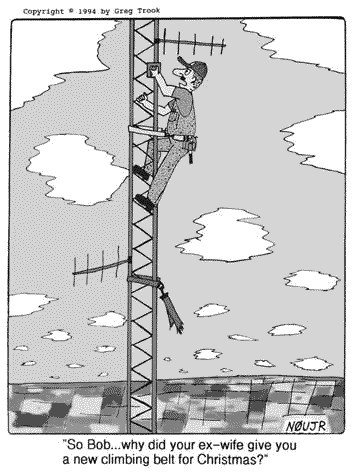 Thanks Jerry and
Mike for this one.
Thanks Jerry and
Mike for this one.
++++++++++++++++++++++++++++++++++++++++++++++++++++++++++
Letter in the Missoulian written by N7TAE
(Now a Silent Key)
Letters for Tuesday, June 15, 2004
 Communications
Internet idea would jam short wave
The communication industry would like to use the electric power network of
distribution wires to carry, along with power for your toaster and vacuum,
very high frequency signals that could be picked up and used by your personal
computer. This would replace your use of telephone lines to reach the
Internet. All these power line wires already function as radio transmitting
antennas, but the 60-cycle per second radio energy does not interfere with
broadcast or short wave radio.
BPL (Broadcast by Power Line) use would insert huge numbers of signals at all
of the so-called "short wave" frequencies onto the lines, superimposed on the
60-cycle power current. The result would be a jumble of transmissions all
across the short-wave band. To a receiver listening at any one frequency the
result is a steady hissing noise strong enough to override any ordinary
message being sent at that frequency.
Proponents of the system say it will occupy all frequencies from 1800
kilohertz to about 80,000 kilohertz. KGVO uses a frequency of 1290 kilohertz.
Within the part of the spectrum are found stations from around the world
(England, Berlin, Moscow, etc.), and many radio systems used by police, fire,
marine and other services. Amateur radio operators use this band heavily to
provide emergency service when disasters interrupt commercial communication
systems.
class="detailstory" A good analogy: Imagine a back-fence conversation
with an air raid siren running steadily on a 50-foot pole at each end of every
alley.
At least six important nations (e.g. Holland, Japan) have rejected this
system. We should also. Our FCC has not taken a stance.
Wayne P. Van Meter, ( Wayne is now a Silent Key but
while he was on this earth he worked very hard in the Hobby to make it
better. )
2224 1/2 Rattlesnake Drive, Missoula
============================================
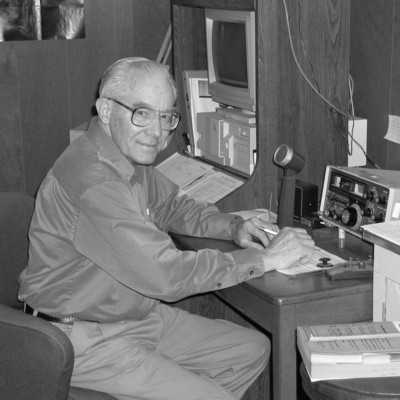
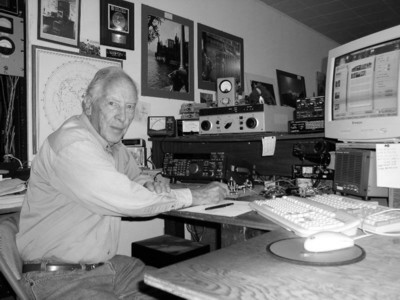
Wayne
Van Meter
Bob Leo
~~~~~~~~~~~~~~~~~~~~~~~~~~~~~~~~~~~~~~~~~~~~~~~~~~~~~~~~~~~~~~~~~~~~~~~~~~~~